

Why Do We Return to Classic Literature?

There is a particular kind of magic in returning to a book you once thought you knew.
Perhaps you first encountered it in a high school classroom, dutifully underlining passages before a quiz. Perhaps it appeared on a college syllabus, read quickly between papers and deadlines. Or perhaps it has remained patiently on your shelf for years, waiting for the right moment to be opened again.
The books themselves do not change. Yet somehow, when we return to them, they do.
One of the enduring gifts of classic literature is its ability to grow alongside us. A novel that seemed tedious at sixteen may feel profound at forty. A character we once admired may suddenly appear flawed. A story that once felt distant can reveal itself to be unexpectedly relevant.
As readers, we often revisit familiar places—a favorite beach, a beloved restaurant, a cherished family home. Returning to a classic work of literature offers a similar experience. We arrive carrying new experiences, different questions, and a deeper understanding of the world. The text remains largely the same, but the reader has changed.
That conversation between past and present is part of what makes classic literature endure. Since 1748, readers have gathered through this institution to encounter new ideas, revisit old ones, and participate in the ongoing exchange of knowledge that defines a thriving intellectual community. The books on our shelves may span centuries, but the impulse that draws us to them remains remarkably consistent: a desire to better understand ourselves and the world around us.
For generations, readers have returned to certain books not because they have exhausted their meaning, but because they have not. Great works of literature rarely reveal everything at once. Instead, they unfold slowly, offering new insights with each reading and inviting us into an ongoing dialogue with the ideas, questions, and experiences they contain.
Some classics offer a window into the concerns, values, and aspirations of earlier generations. Others illuminate aspects of human nature that remain remarkably familiar across centuries. Love and ambition, grief and belonging, fear and hope—these experiences continue to connect readers across time and place.
Returning to a familiar book can also remind us how much we ourselves have changed. A novel read in adolescence may resonate differently after years of work, friendship, family, loss, or personal growth. Passages once overlooked suddenly feel significant. Characters we dismissed become more sympathetic. Questions that once seemed distant become deeply personal.
In an age shaped by constant notifications, endless headlines, and ever-shortening attention spans, classic literature asks something different of us. These books invite us to slow down. To linger. To reflect. They remind us that reading is not simply an act of consumption, but a practice of curiosity and attention.
Perhaps that is why these works continue to endure. They are not relics of the past, preserved behind glass and admired from afar. They are living conversations—waiting patiently for each new generation of readers to join in.
As custodians of one of America’s oldest circulating libraries, we are reminded of this every day. Generations of members have checked out these same volumes, wrestled with many of the same questions, and returned to familiar stories at different stages of life. In that sense, rereading is not simply a personal act—it is a tradition that connects us to a much larger community of readers, past and present.
And, with that in mind, here are…
Five Classics Worth Opening Again
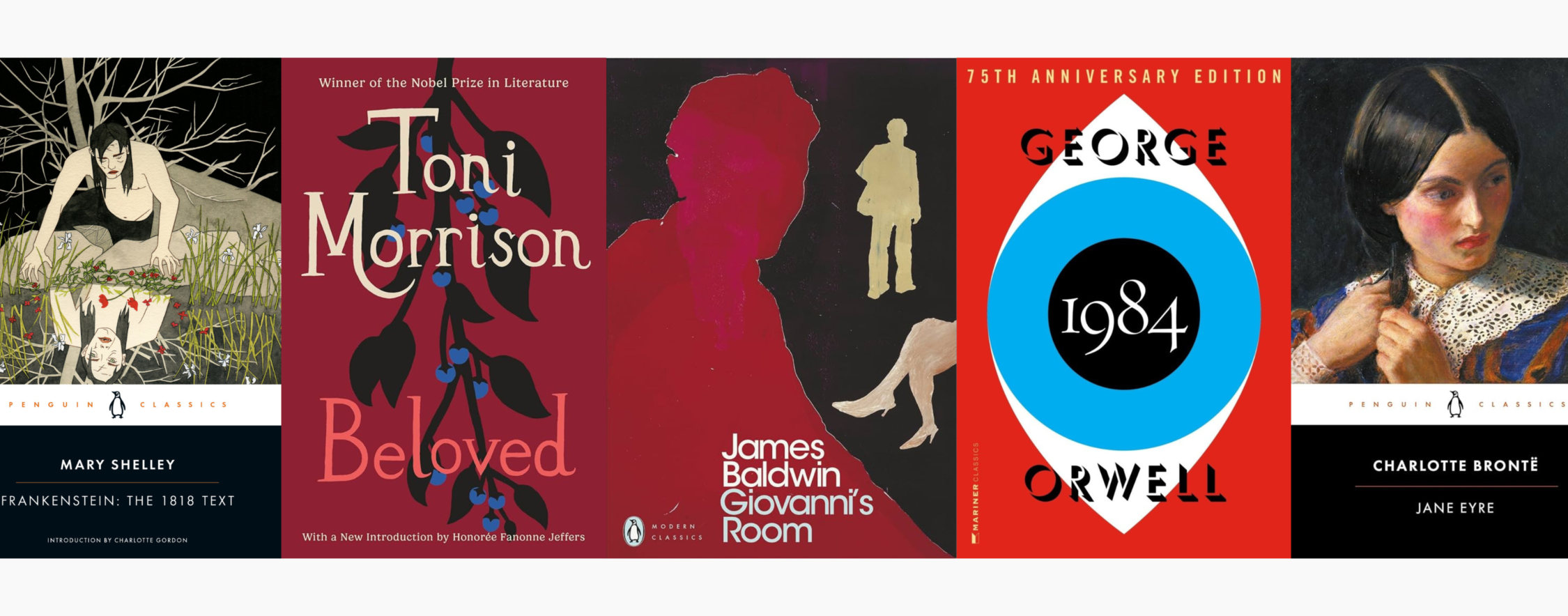
Frankenstein by Mary Shelley
Frequently remembered as a tale of monsters and scientific ambition, Frankenstein becomes far more complex upon rereading. Shelley asks enduring questions about responsibility, loneliness, creation, and what it means to be human. Nearly two centuries before conversations about artificial intelligence and emerging technologies became commonplace, she was already exploring the consequences of innovation without foresight or compassion. Returning to the novel today, readers may find themselves less concerned with the monster himself and more interested in the choices—and failures—that shaped his fate.
Beloved by Toni Morrison
Some books demand to be revisited because they reveal something new with every reading. Beloved is one such work. Morrison’s masterpiece confronts the lasting legacy of slavery while exploring memory, grief, motherhood, and the ways in which the past continues to shape the present. It is a challenging novel, but also a profoundly rewarding one—rich with language, symbolism, and emotional depth. Reading Beloved as an adult often reveals not only the power of Morrison’s storytelling, but also the remarkable ways literature can help us wrestle with history and its enduring impact.
Giovanni’s Room by James Baldwin
Many readers first encounter James Baldwin through his essays, but Giovanni’s Room remains one of his most powerful explorations of identity, love, and belonging. Published in 1956, the novel examines desire, self-deception, and the consequences of denying one’s true self. While younger readers may focus on the novel’s romance and heartbreak, returning to it later in life often brings its deeper questions into sharper focus. How much of ourselves are we willing to reveal? What do we sacrifice when we choose fear over authenticity? Baldwin’s insights remain as relevant and moving today as they were nearly seventy years ago.
1984 by George Orwell
For many readers, 1984 is a book associated with classrooms, vocabulary quizzes, and warnings about totalitarian governments. Yet revisiting Orwell’s novel as an adult can be a startling experience. Beyond its political themes, 1984 is ultimately a story about truth, memory, language, and the fragility of individual freedom. In an era shaped by information overload, competing narratives, and rapidly evolving technology, Orwell’s questions feel less like historical speculation and more like an invitation to consider how societies shape what people believe, remember, and accept as reality.
Jane Eyre by Charlotte Brontë
For many readers, Jane Eyre is remembered as a gothic romance filled with mystery, memorable characters, and one of literature’s most enduring love stories. Yet returning to the novel as an adult often reveals something even more compelling. Beneath its dramatic plot lies a thoughtful exploration of independence, integrity, and the difficult balance between love and self-respect. Jane’s determination to remain true to her principles—even when doing so comes at great personal cost—continues to resonate with readers nearly two centuries after the novel’s publication. It is a story not only about finding love, but about discovering one’s own voice.