

- This event has passed.
Six Decades of USAID
March 12 @ 6:00 pm - 7:00 pm
$10.00 – $15.00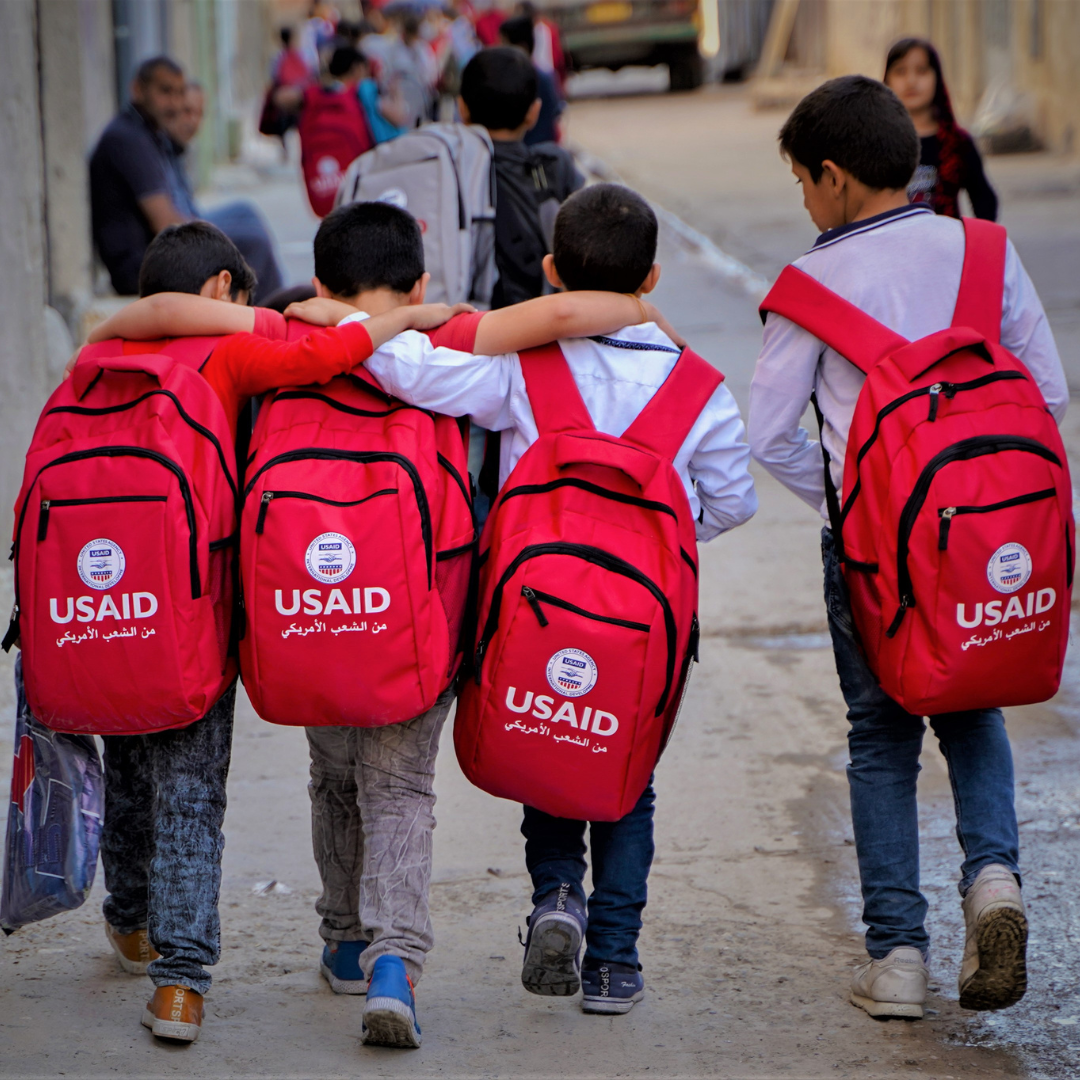
USAID was established by President John F. Kennedy in 1961 to unify America’s foreign aid programs and deliver benefits both abroad and at home. Internationally as well as in South Carolina, the agency’s work created tangible economic value. With the agency now largely closed and the future of foreign aid uncertain, we are thrilled to host a panel of former USAID professionals from the Charleston area to share insights about the inner workings of the organization and how things were implemented on the partner side, as well as what foreign aid could look like in our future. Moderated by author and journalist Adam Parker, the panel consists of five USAID alumni: Robbie Harris, strategic communications expert; John Simpkins, former general counsel; Brady Anderson, former director; Carmen Buero Conley, international development specialist; and Julie Grier-Villatte, strategist and global operations leader. Together, they will examine a legacy of foreign policies and practices that spanned six decades.
Prior to the program, we invite our Fellows Members to enjoy Happy Hour from 5:00 – 6:00 pm, downstairs in the Dr. Suzan D. Boyd Fellows Club Lounge.
About Robbie Harris
Robbie Harris is a strategic communications and behavior change subject matter expert with over 25 years’ experience in Iraq, Syria, the Sahel, and Central America, working with local influencers, activists, civil society organizations, journalists, and senior stakeholders to design and implement strategies and communications campaigns that ignite and drive social movements. Her strategies utilize the intersectionality of traditional and digital communications and face-to-face human engagement and action to reduce the influence of and enable resilience to mis and disinformation and violent extremism; catalyze personal agency amongst youth; mitigate the polarization and marginalization that leads to conflict and violence; and promote women’s involvement in decision making. Ms. Harris has designed and implemented programs for the US Department of State, US Agency for International Development, the UK Foreign and Commonwealth Development Office. She holds an M.A. in Arab Studies from Georgetown University
About John Simpkins
John L. S. Simpkins is a Senior Moderator with the Aspen Institute. He is the former President and CEO of MDC, an organization working on behalf of racial equity and economic mobility in the South. Previously, he served as VP Aspen Global Leadership Network at the Aspen Institute. Prior to that, he was an executive with Prisma Health, where he led collaborative, evidence-based efforts to promote health innovation, access, and equity. He is also a Senior Lecturer at Duke Law School. John was appointed to the Senior Executive Service in the Obama Administration, where he served as general counsel for the U.S. Agency for International Development and deputy general counsel for the White House Office of Management and Budget. Before joining the government, he was of counsel with Wyche, P.A., visiting assistant professor of law at the University of Victoria, and an assistant professor at Charleston School of Law. He continues to work as a consultant and researcher in comparative constitutional law and constitutional design. John received his AB in government from Harvard College and a JD and LLM in international and comparative law from Duke University School of Law. He is a Fellow of the fourth class of the Liberty Fellowship.
About Brady Anderson
A native of Helena, Arkansas, Brady Anderson graduated from Rhodes College and entered the US Navy as an officer on board a US Destroyer. After service in Vietnam, he and his wife, Betty, graduated from the University of Arkansas School of Law. He served on Bill Clinton’s staff in the Arkansas Attorney General’s office and in the Governor’s office. He and Betty spent many years in East Africa, where they conducted sociolinguistic research in a dozen African languages for the Wycliffe Bible Translators. In 1994, then-President Bill Clinton appointed Brady to be the U.S. ambassador to Tanzania from 1994 to 1997. The embassy was destroyed by a terrorist bomb in 1998. He served as the Administrator of the United States Agency for International Development (USAID) from 1999 to 2001. His priorities as USAID Administrator included democracy promotion and economic growth in the Balkans and the Middle East, and improving public understanding of U.S. foreign assistance. He is currently on the board of Metanoia, a community development nonprofit in North Charleston, and Empower Charleston. The Andersons reside in Mt. Pleasant, SC. They have two daughters and four grandchildren.
About Carmen Buero Conley
Carmen Buero Conley is a native Charlestonian and graduate of the College of Charleston, who entered the field of international development more than 20 years ago. She has worked for a government contractor and non-profit organizations that received significant funding from the US Agency for International Development (USAID), as well as for the United Nations. Her specialty was ensuring that government systems functioned such that countries could generate more local funding and better service delivery for basic health, education, and water, in places such as Afghanistan, Pakistan, and Nigeria. With a Master’s Degree in Conflict Resolution, she worked to help stabilize countries prone to conflict, to mitigate the emergence of global disasters that could lead to mass suffering, and also put pressure on the US to intervene.
About Julie Grier-Villatte
Julie brings over 20 years of experience in community development, with a strong focus on child protection, mental health, and local capacity building. Her work has taken her across the U.S. and around the world—from hands-on support for kids and families to shaping international development policy as a U.S. Foreign Service Officer in seven countries. She has extensive experience with building high-performing teams, strategic planning and implementation, and change management. Julie’s approach is all about meeting people where they are, building on their strengths, and creating space for healing and growth. She’s known for her warmth, creativity, and deep commitment to making a difference, especially in places that have faced adversity. She holds degrees in Psychology and French (College of Charleston), International Security Studies (University of St. Andrews), and Public Policy and Development (Maastricht Graduate School of Governance). Julie speaks English, French, Spanish, and Haitian Creole. Outside of work, Julie loves reading, laughing with her son, spending time in nature, and has a great story about being attacked by peacocks (yep!).
About Adam Parker – Moderator
Adam Parker earned two degrees in music, then spent a decade in the business world before going back to school for a graduate degree in journalism from Columbia University. At The Post and Courier, he has worked on several beats over the years, including religion, education, the arts, and, most recently, race and history. Today, he edits the climate and education teams. A long-time student of the civil rights movement and race in America, he has written extensively about the African-American experience. He is the author of the biography “Outside Agitator: The Civil Rights Struggle of Cleveland Sellers Jr.,” published by Hub City Press, and “Us: A Journalist’s Look at the Culture, Conflict, and Creativity of the South,” published by Evening Post Books.