

Republic and Empire // Andrew O’Shaughnessy
April 9 @ 6:00 pm - 7:00 pm
$10.00 – $55.00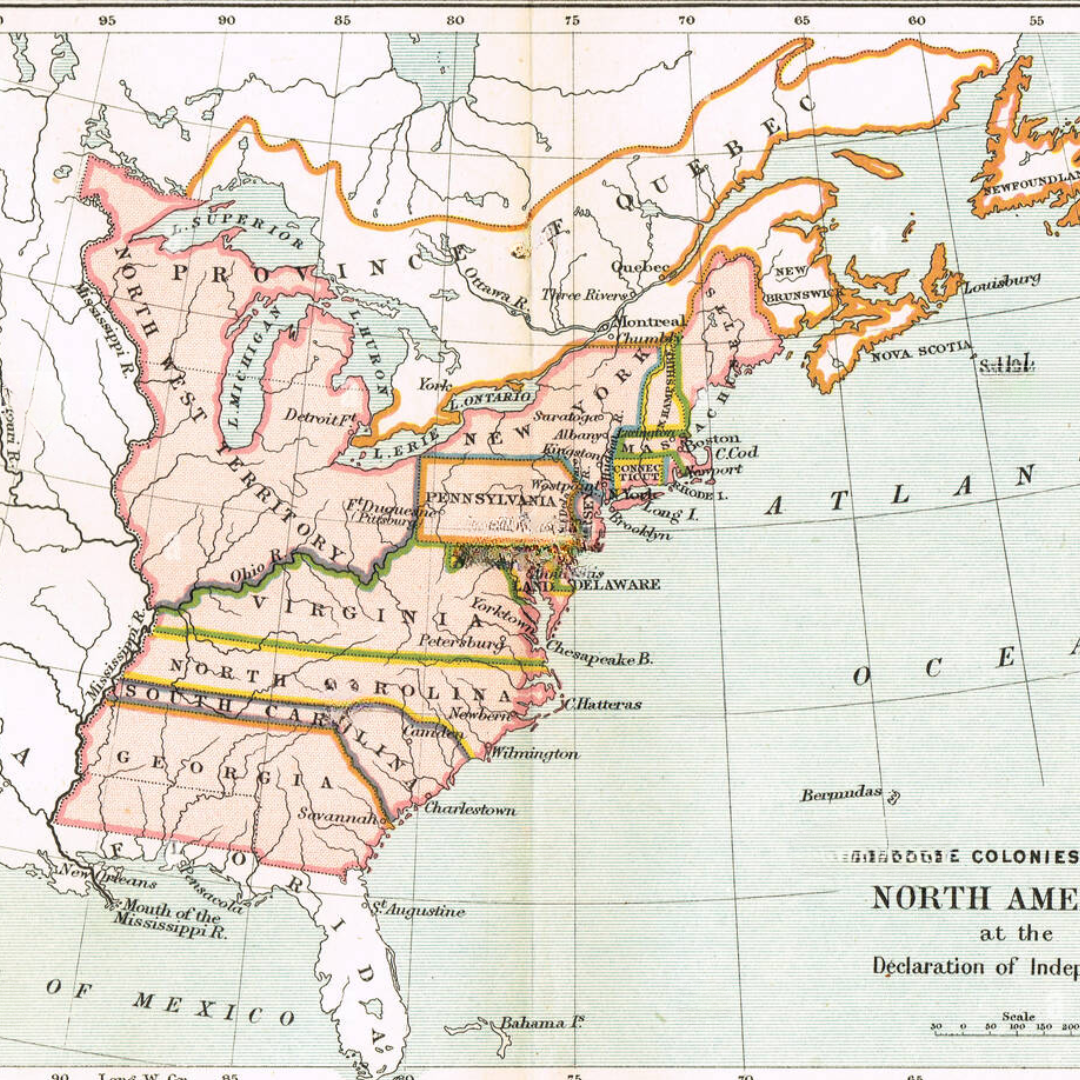
Join us in partnership with the South Carolina Historical Society as we approach our country’s 250th anniversary — we have explored many different angles of the Revolution – those specific to South Carolina, further narrowed to the Lowcountry, the thirteen colonies as a whole, and much, much more. But what of the Loyalists? Those who didn’t stand up to British rule and supported the empire and its endeavors? We are highly anticipating the return of celebrated author and renowned historian Andrew O’Shaughnessy for his latest, another perspective on the Revolutionary era – perhaps a more expanded context from what might be more broadly familiar. Joining O’Shaughnessy in conversation will be South Carolina Historical Society CEO, Elizabeth Chew.
If you are unable to attend the event, but would like to purchase one or more copies, please visit Buxton Books here.
Prior to the program, we invite our Fellows Members to enjoy Happy Hour from 5:00 – 6:00 pm, downstairs in the Dr. Suzan D. Boyd Fellows Club Lounge.
About the Book
At the time of the American Revolution (1765–83), the British Empire had colonies in India, Africa, the Caribbean, the Pacific, Canada, Ireland, and Gibraltar. The thirteen rebellious American colonies accounted for half of the total number of provinces in the British world in 1776. What of the loyal half? Why did some of Britain’s subjects feel so aggrieved that they wanted to establish a new system of government, while others did not rebel? In this authoritative history, Trevor Burnard and Andrew Jackson O’Shaughnessy show that understanding the long-term causes of the American Revolution requires a global view. As much as it was an event in the history of the United States, the American Revolution was an imperial event produced by the upheavals of managing a far-flung set of imperial possessions during a turbulent period of reform. By looking beyond the familiar borders of the Revolution and considering colonies that did not rebel—Quebec, Nova Scotia, Bermuda, India, the British Caribbean, Senegal, and Ireland—Burnard and O’Shaughnessy go beyond the republican, liberal, and democratic aspects of the emerging American nation, providing a broader history that transcends what we think we know about the Revolution.
About the Author
Andrew O’Shaughnessy is a distinguished historian and Professor of History at the University of Virginia. From 2003 to 2022, he served as Vice President of The Thomas Jefferson Foundation (Monticello) and led the Robert H. Smith International Center for Jefferson Studies. A dual citizen of Britain and the United States, O’Shaughnessy completed his undergraduate and doctoral degrees at Oxford University. His illustrious teaching career includes roles at Eton College, Southern Methodist University, and the University of Wisconsin-Oshkosh, where he chaired the History department. O’Shaughnessy is the acclaimed author of The Men Who Lost America, which won eight national awards, including the George Washington Book Prize and the National Society Daughters of the American Revolution Excellence in American History Book Award. His other notable works include An Empire Divided and The Illimitable Freedom of the Human Mind. A Fellow of the Royal Historical Society, he also serves as an editor of the Jeffersonian America series. O’Shaughnessy has also co-edited The European Friends of the American Revolution, which was published in 2023. His latest book, which will be published by Yale early in 2025, is co-authored with Trevor Burnard, The American Revolution and the Crisis of the British Empire. O’Shaughnessy’s expertise and contributions make him a leading voice in American history.
About Elizabeth Chew
About The South Carolina Historical Society
The mission of the South Carolina Historical Society is to collect, preserve, and share the stories of all South Carolinians and use these stories–from significant historical events to everyday moments–to promote visibility, understanding, engagement, and conversation. The story of South Carolina is the story of America. As such, it reflects the achievements and the challenges, the successes and the failures, of the American experiment. As the only statewide, private, non-profit historical organization, founded in 1855, the South Carolina Historical Society seeks to be the preeminent interpreter of that history to the broadest possible audience.
About SC 250
SC250 Charleston is intended to serve as an umbrella for Charleston-area community organizations, governmental entities, and business enterprises interested in conceiving, building and sponsoring initiatives that commemorate the American Revolution and leading roles played by Charleston’s people and places. This program is sponsored (in part) by the South Carolina American Revolution Sestercentennial Commission. SC250 was established by the SC Legislature to commemorate the 250th anniversary of the Revolutionary-Era and highlight the state’s significant role in securing America’s freedom by engaging and inspiring South Carolinians and visitors through heritage tourism, rural economic impact initiatives, and educational programs. Contents and opinions do not necessarily reflect the views or policies of SC250, nor does the mention of trade names or commercial products constitute endorsement or recommendation by SC250.