

Indigenous Conflict with CLAW
November 4 @ 6:00 pm - 7:00 pm
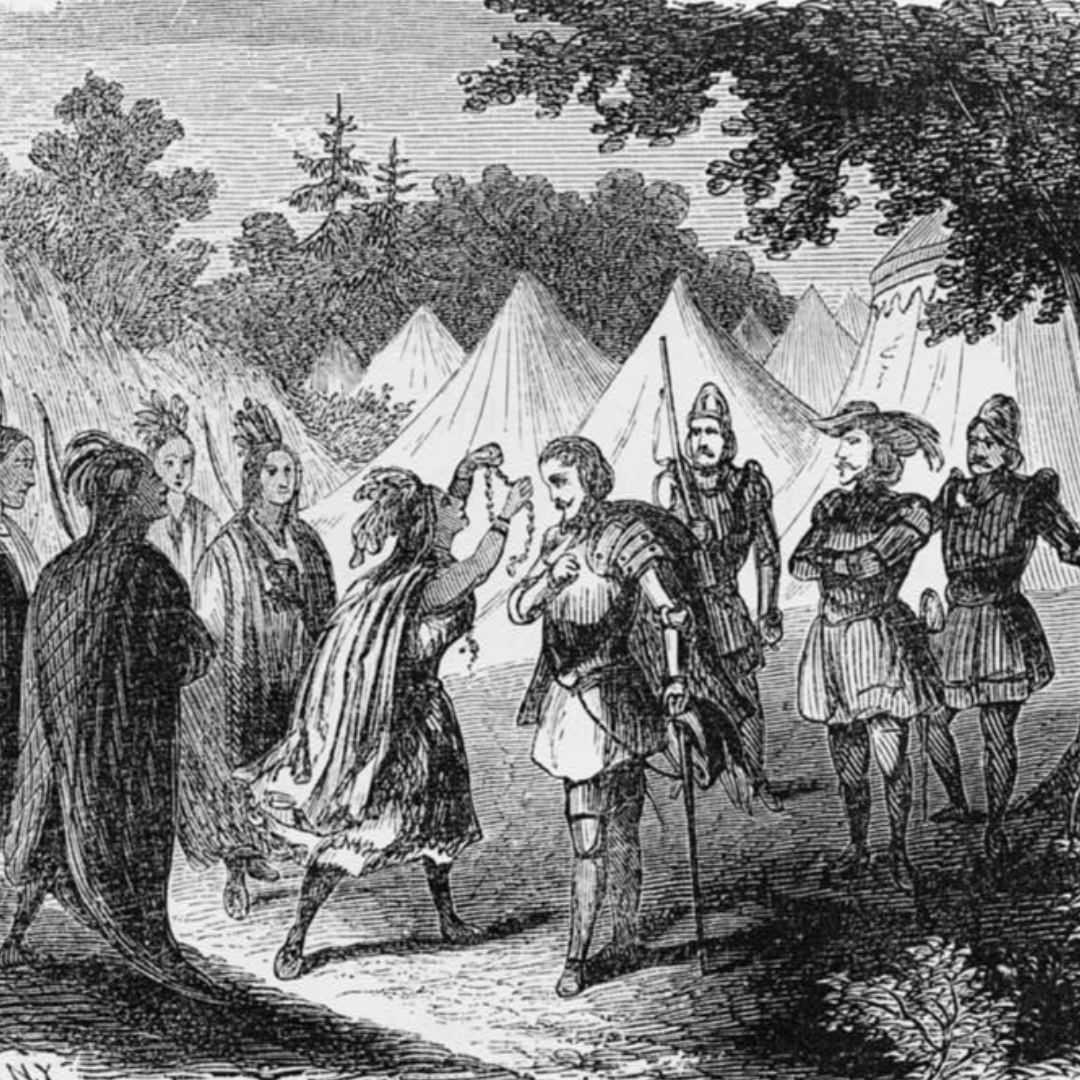
In partnership with C of C’s Carolina Lowcountry and Atlantic World Program, we are pleased to invite a timely discussion on North America’s Indigenous conflicts during the Colonial Era and at pivotal moments during the American Revolution. With a specific focus on the late 18th century, CLAW Program Director Dr. Sandy Slater will host a conversation with subject matter experts Dr. Andrew Johnson and Professor Kevin Kokomoor on their recent publications, which put South Carolina and its First Peoples into greater context and shed light on an overlooked aspect of this important history.
About the Books
The Cherokee War of 1776
The forgotten history of the US war against the Cherokee offers a crucial reframing of America’s origin story.
Americans remember 1776 as the year liberty was declared, the moment they cast off tyranny and proclaimed the self-evident truths of equality and freedom. But that same summer, as patriots celebrated their defiant new nation, American armies launched another campaign—this one aimed at destroying the Cherokee nation. The Cherokee War of 1776 recasts America’s founding moment by tracing the importance of westward ambition and settler violence to the origins of the Revolutionary War. In this gripping and sobering book, historian Kevin Kokomoor uncovers the rarely acknowledged war waged by the emerging United States against the Cherokee people just days after the Declaration of Independence was signed. Far from a spontaneous frontier skirmish, this war was a coordinated, state-backed campaign with a clear aim: seize Indigenous land and crush Native resistance. Many of the very men who championed liberty on parchment simultaneously advocated for the wholesale destruction of a sovereign Native nation. At the heart of this story is Cherokee resistance, which was strategic, determined, and deeply rooted in community dynamics. Figures like Dragging Canoe emerged to lead a movement that endured long after American armies had burned Cherokee towns to the ground. Kokomoor foregrounds Cherokee voices, motivations, and resilience, challenging the notion that they were merely pawns in a colonial struggle and forcing us to reckon with the real costs of independence and the long fight for Indigenous sovereignty.
Enslaved Native Americans and the Making of Colonial South Carolina
In 1708, the governor of South Carolina responded to a request from London to describe the population of the colony. This response included an often-overlooked segment of the population: Native Americans, who made up one-fourth of all enslaved people in the colony. Yet it was not long before these descriptions of enslaved Native people all but disappeared from the archive. In Enslaved Native Americans and the Making of Colonial South Carolina, D. Andrew Johnson argues that Native people were crucial to the development of South Carolina’s economy and culture. By meticulously scouring documentary sources and creating a database of over 15,000 mentions of enslaved people, Johnson uses a uniquely interdisciplinary approach to reconsider the history of South Carolina and center the enslaved Native people who were forced to live and work on its plantations. Johnson also employs spatial analysis and examines archaeological evidence to study Native slavery in a plantation context. Although much of their impact is absent from the historical record, Native people’s influence persisted: in the specific technologies they brought to the plantations where they were enslaved; in the development of Creole culture; and in the wealth and power of the founders and early leaders of the colony. This book is an important corrective to our understanding of the colonization and development of South Carolina. By focusing on the Native minority of the enslaved population, Johnson recasts the colonial history of America, uncovering the importance of enslaved Native people to the colonial project and the complex historical connections between race and slavery.
About Professor Kevin Kokomoor (from 2024)
Kevin Kokomoor is a fourth-generation Floridian who grew up in the Tampa Bay area. He earned his bachelor’s and master’s Degrees in History at the University of South Florida and his Doctorate in Early American History at Florida State University. His first academic position after graduate school was at Coastal Carolina University in Myrtle Beach, South Carolina, where he is currently employed. In addition to La Florida, he has also authored several articles in academic journals, including Journal of Southern History, Georgia Historical Quarterly, Florida Historical Quarterly, Journal of Sport History, and Journal of the Gilded Age and Progressive Era. He won the Thompson Award for the best article published in Florida Historical Quarterly in 2009 and the E. Merton Coulter Award for the best article published in Georgia Historical Quarterly in 2013. In 2017 he was a Howard H. Peckham Fellow of Revolutionary America at the Clements Library at the University of Michigan. Other sources of support include the American Philosophical Society, the David Library of the American Revolution, Emory University, and the University of Florida.
About Dr. Andrew Johnson
Dr. Andrew Johnson is a historian of early America and the early-modern Atlantic and is the editor of publications at the South Carolina Department of Archives and History. He received his bachelor’s degree from the University of South Carolina and PhD from Rice University. The winner of numerous academic awards, including The Fletcher M. Green and Charles W. Ramsdell Award from the Southern Historical Association for the best article published in the Journal of Southern History over a two-year period. His publications include Enslaved Native Americans and the Making of Colonial South Carolina (Johns Hopkins University Press), the Journals of the House of Representatives of South Carolina, 1794–1795 (South Carolina Department of Archives and History), as well as co-editing Atlantic Environments and the American South (University of Georgia Press).
About Dr. Sandy Slater
Dr. Sandra Slater is Professor of History and Director of the Carolina Lowcountry and Atlantic World Program (CLAW) at the College of Charleston. She has published widely in scholarly journals such as Church History and the Journal of Early American History. Her recent book, The Pompe and Pride of Man: Pride and Humility in Early New England was published in 2025 and was nominated for the Winthrop Prize. Professor Slater is the chair of the Native American Task Force at the College of Charleston and in her role as Director of CLAW, works with scholars, public historians, archives and museums across the Atlantic World to host academic programming at CofC.